27 August 2026
The mug deposit explained: why your mulled wine costs more than the menu says
Pfand, the refundable mug deposit, catches out almost every first-time visitor. Here is exactly how it works.
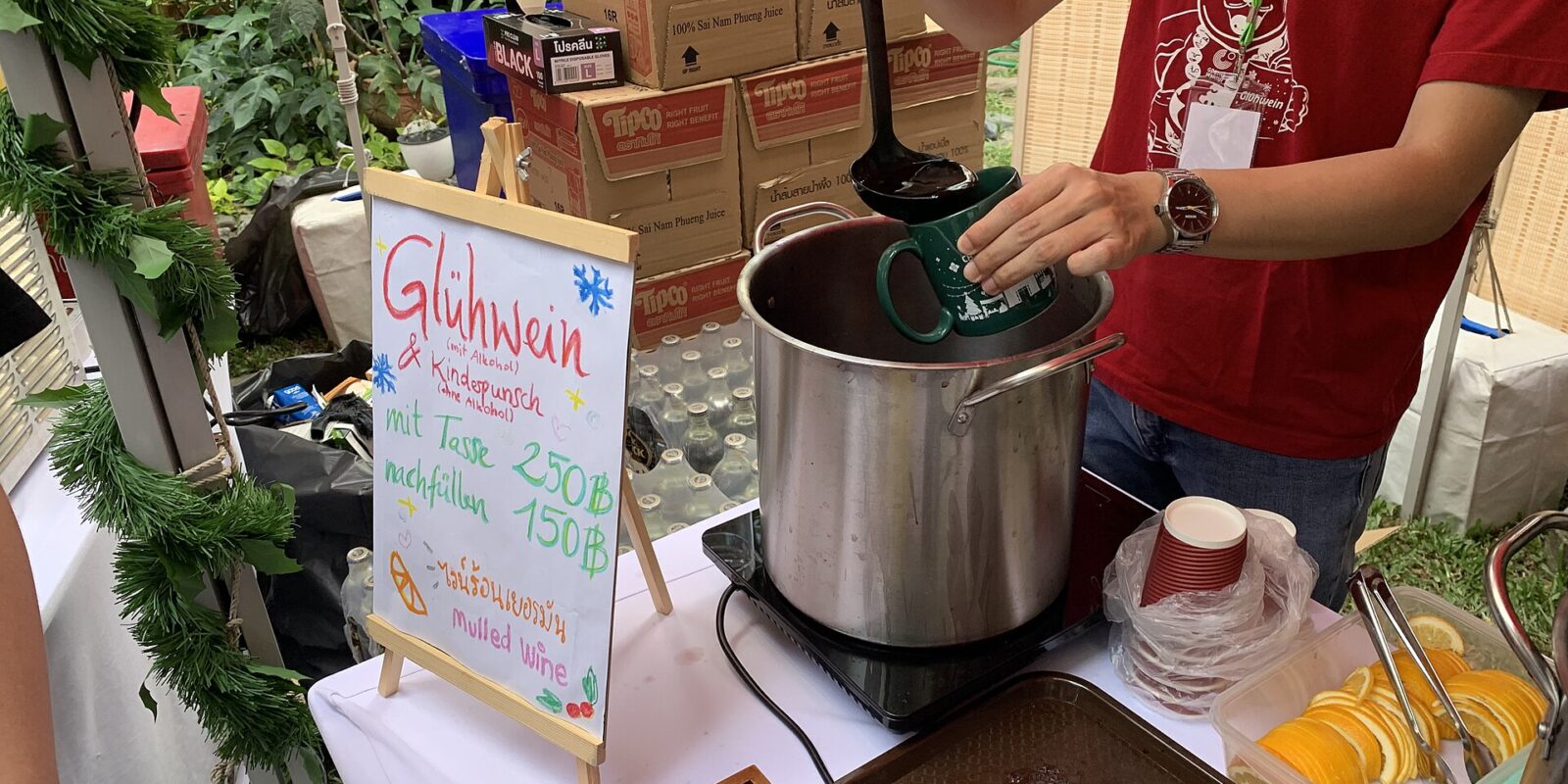
You order a Glühwein. The board says €4.50. You are asked for €8. Nothing has gone wrong, and you have not been overcharged.
What is happening
German and Austrian markets serve hot drinks in real ceramic mugs rather than disposable cups, and they take a deposit against the mug — Pfand — on top of the price of the drink. Hand the mug back at any stall run by the same operator and you get the deposit returned in full.
Deposits are typically a few euros, sometimes more for a collectable design. The exact figure is nearly always printed on the price board, usually in smaller text underneath.
Or keep it — that is the point
The mugs are designed to be kept. Most markets issue a new design annually, stamped with the year and the town, and for a lot of visitors collecting them is a genuine part of the trip. If you keep it, you simply do not reclaim the deposit. Nobody minds; the deposit is essentially the price of the mug.
Chicago’s Christkindlmarket has taken this furthest — its boot-shaped mug changes design every year and people queue specifically for it.
The rules that catch people out
- Return it to the right operator. A large market may have several different companies running stalls, each with their own mugs. Hand a mug back at the wrong hut and you may be politely refused.
- Keep the token if you are given one. Some markets hand over a plastic chip instead of tracking the mug itself. Lose the chip, lose the deposit.
- Return it before the last night. Obvious, but easily forgotten on a final evening.
- A chipped mug is usually still refundable. A shattered one is not.
In the UK
The system has spread. Manchester is the best-known example — its mugs are collected fairly obsessively, and most people never reclaim the deposit at all. Other UK markets use disposable cups, or charge a deposit only on the reusable option.
Practical advice
Carry a couple of small notes or coins specifically for deposits. It is the one thing that reliably catches out visitors expecting to tap a card for exactly the advertised price, and the queue behind you will not thank you for discovering it at the front.